
TACOMA QUESTIONS. REAL ANSWERS: Commencement Bay's Cleanup — What Got Fixed, What Still Waits
The bay was one of America's original Superfund sites, a shoreline of smelter slag and chemical lagoons. Four decades on, we read the bay's report card reach by reach.
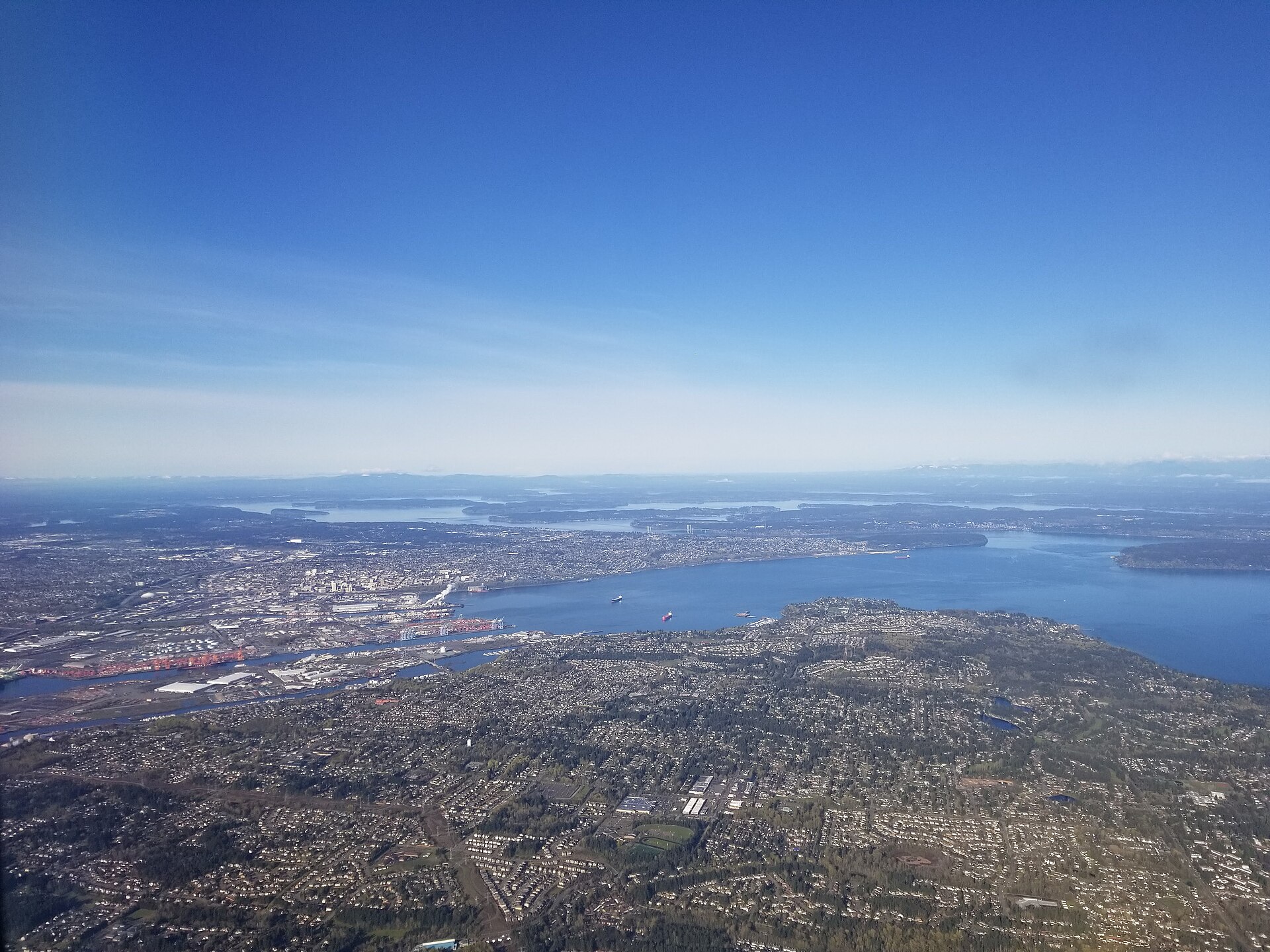
Commencement Bay's beauty is recent. In 1981, the bay's nearshore and tideflats became one of the first Superfund sites in the nation — a working waterfront layered with a century of copper smelting, chemical plants, pulp mills and shipyards, its sediments carrying arsenic, lead, PCBs and a chemical catalog that took the EPA years just to organize into operable units and cleanup areas.
What got fixed is a great deal, and it is visible from Ruston Way: the Thea Foss and Wheeler-Osgood waterways, once industrial drains, have been dredged, capped and replanted into the marina-lined inlet where the Museum of Glass now stands; the old ASARCO smelter site at the bay's north end — the 571-foot stack that was demolished in 1993 — has been through years of soil cleanup and redevelopment as Point Ruston; contaminated sediments across the bay's problem areas have been capped or removed by the dozens of acres.
What still waits is specific rather than general: long-term monitoring of the sediment caps that must hold for decades, groundwater plumes at legacy industrial sites moving slowly toward the shore, and the Hylebos Waterway's and Middle Waterway's remaining cleanup phases and five-year EPA reviews, which are public documents and worth any waterfront resident's skim. The bay's fish and shellfish advisories, posted by the state and the Tacoma-Pierce County Health Department, remain the honest scoreboard — they are narrower than they were, and they are not gone.
The verdict the record supports: Commencement Bay is the proof-of-concept that a Superfund waterfront can come back — the museums, marinas and seals are not a cover story; they are the remediation's outcome — and simultaneously a standing lesson that 'cleaned up' in industrial water is a maintained condition, like a seawall, not a finished one. The bay earned its second act. It keeps earning it.