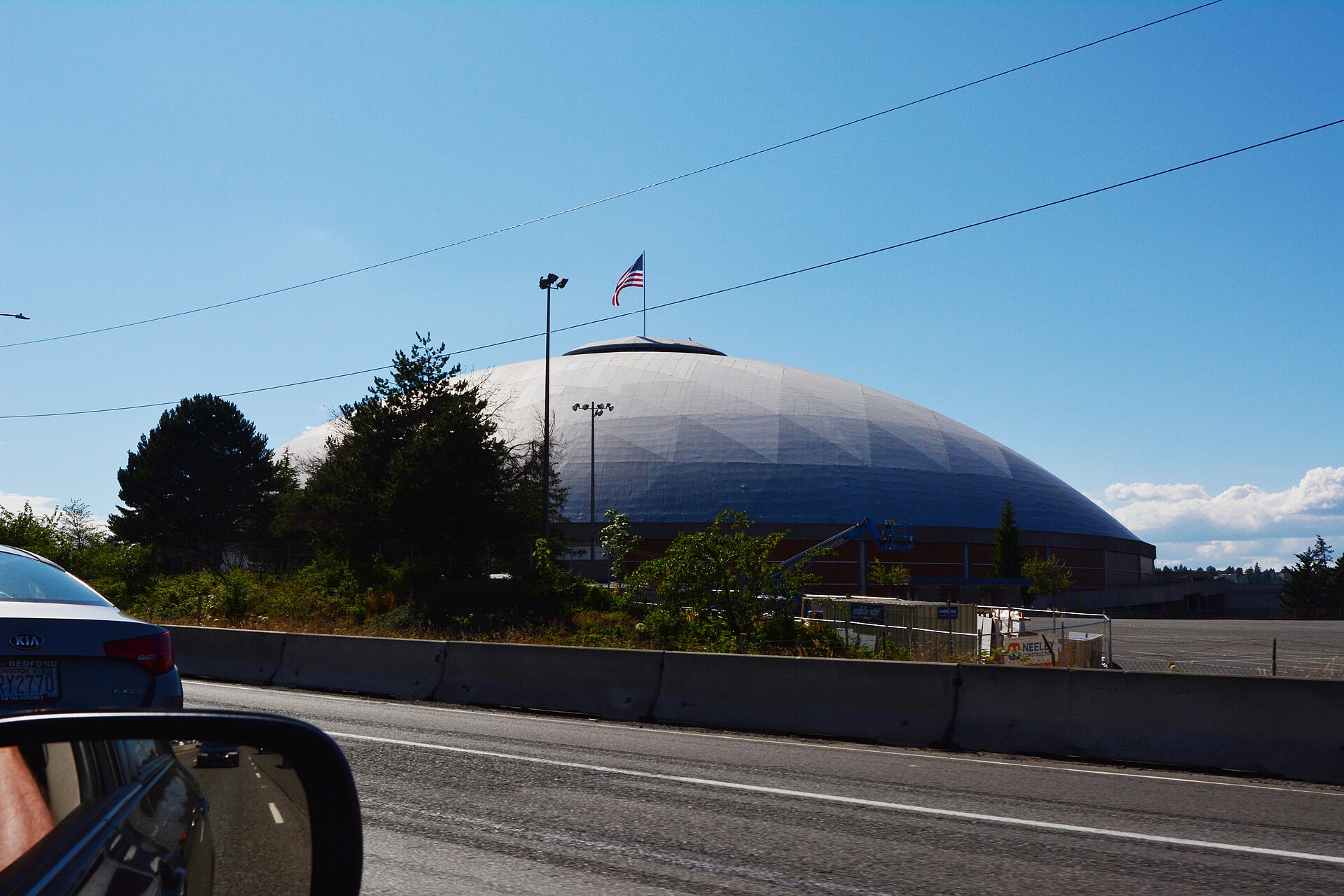
The Narrows Bridge: Tacoma's Toll-Paying Link to the Peninsula
Two spans, one famous collapse, and a toll that every westbound driver meets. How the Tacoma Narrows Bridge works — and what its traffic decides for two counties.
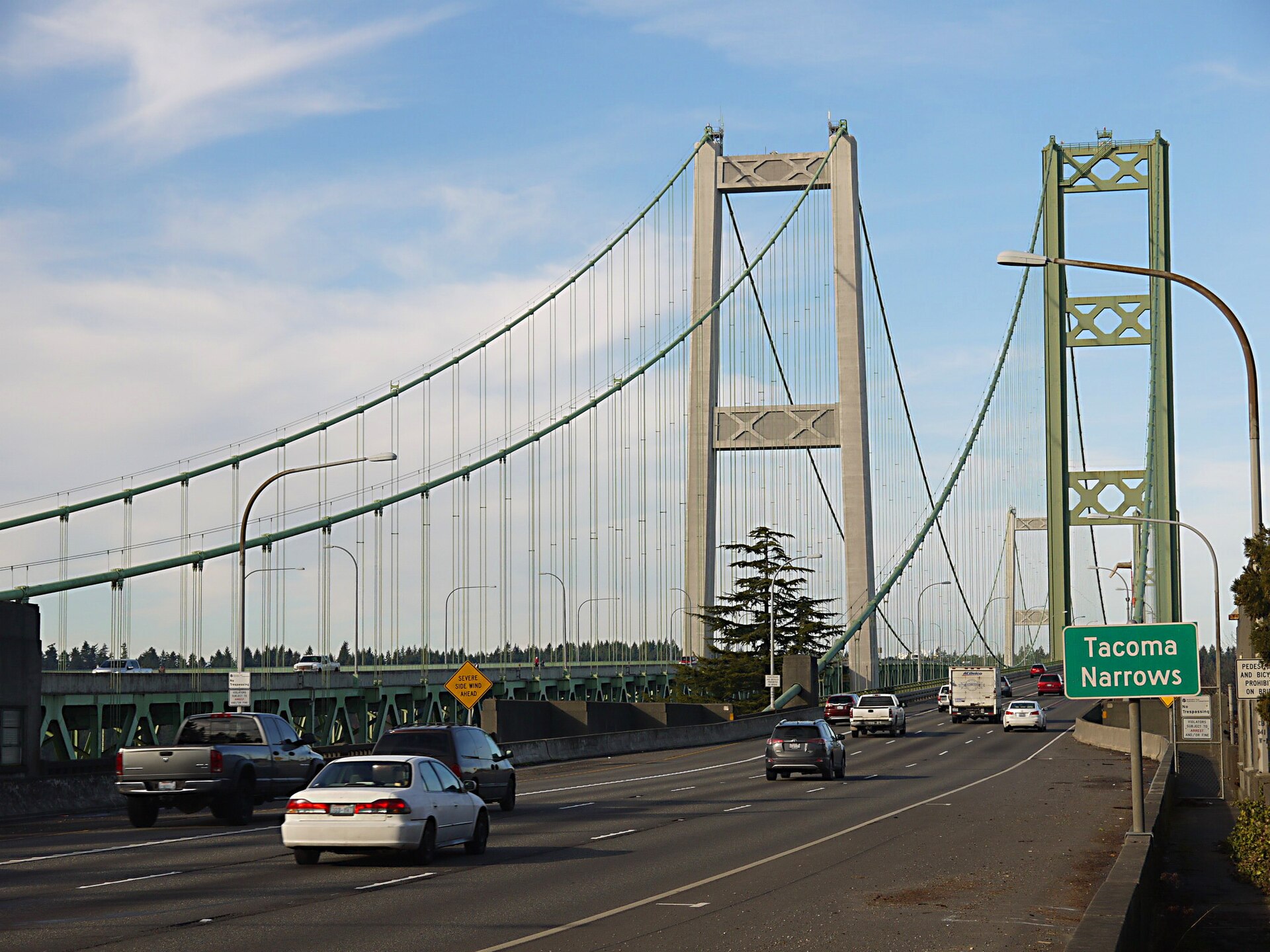
The crossing at the Narrows carries one of Puget Sound's great stories and about 90,000 vehicles on a busy day. The first bridge here — 'Galloping Gertie,' whose twisting collapse into the strait in November 1940 became the most famous engineering failure film in history — was replaced in 1950; the second, parallel span opened in 2007 to carry eastbound traffic, and with it came the tolls that now structure the whole crossing's economics.
The practical facts every Gig Harbor and Key Peninsula commuter recites: the toll is collected eastbound only, on the newer bridge; Good To Go accounts pay the lowest rate, pay-by-mail the highest; and the bond payments the tolls service run for decades — the price of a second span the region needed a generation before it built it. WSDOT's rate-setting for the crossing is a civic ritual all its own, argued over in public by the bridge's citizen advisory committee.
Operationally, SR-16 across the Narrows is a wind gauge and a lifeline at once: the strait's gusts bring high-profile-vehicle warnings in winter storms, and any incident on either span pushes the peninsula's whole traffic onto the bridge's twin or the long way around through Olympia. There is no third option — geography insists.
November driving over the Narrows is its own drama: rain bands crossing the strait, the water black below, Kitsap's lights ahead. Check your Good To Go balance, respect the wind warnings, and spare a thought at midspan for Gertie's ghost — the bridge that taught engineering humility, directly beneath the one that replaced her.