The Dome on the Skyline: Four Decades Under the World's Largest Wooden Roof (Give or Take)
The Tacoma Dome has been a concert hall, a sports arena, a graduation stage and the city's default landmark since 1983. What a wooden dome does for a city's sense of itself.
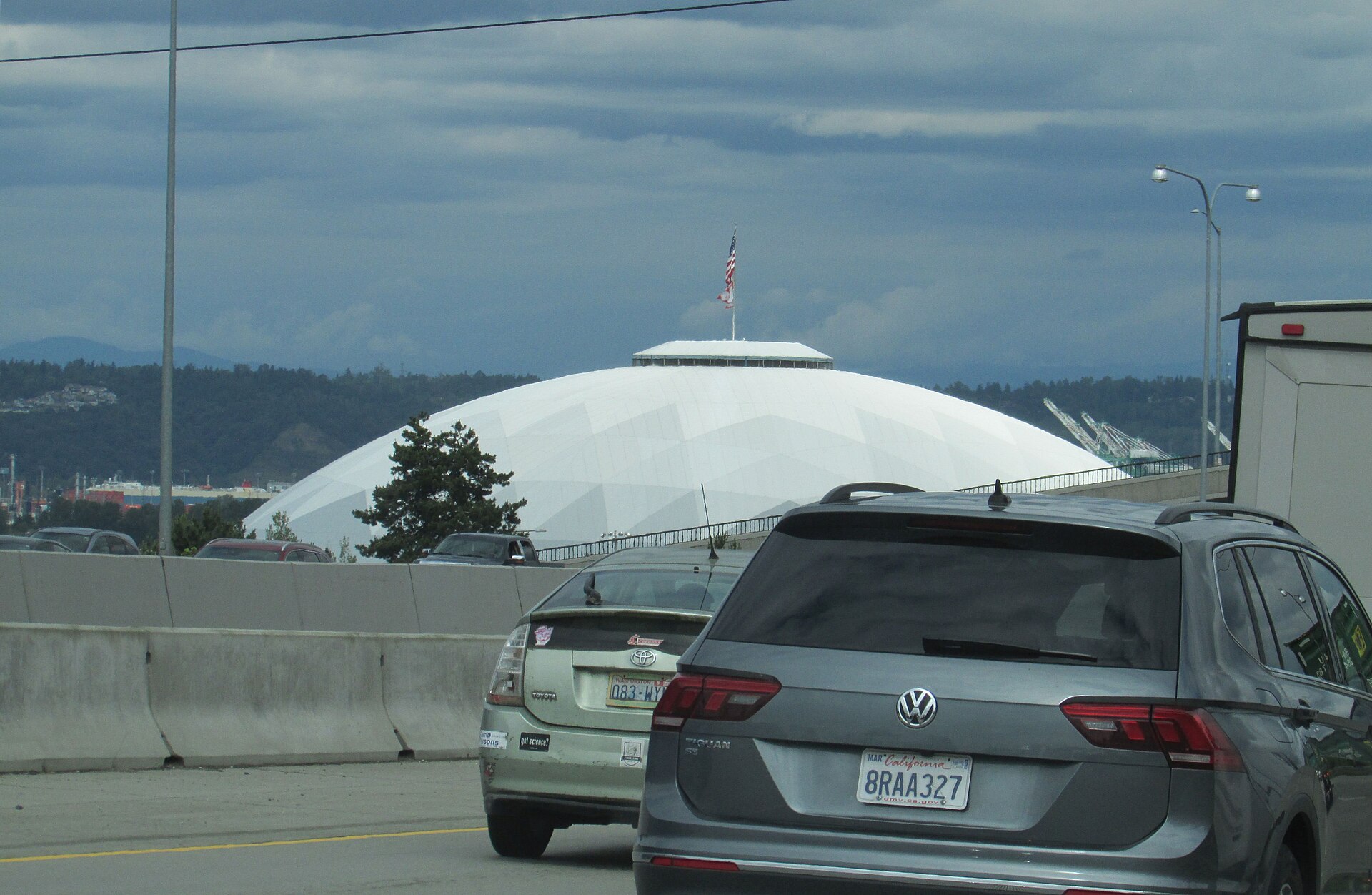
It is visible from everywhere, which was the idea. The Tacoma Dome opened in 1983 beside I-5 — a 152-foot wooden dome, among the largest wood-domed structures on earth, seating more than 20,000 for its biggest configurations — and promptly became the shape Tacoma draws when it draws itself.
Its résumé is the South Sound's memory book: decades of concerts and tours, state high school championships across sports, home and garden shows, monster trucks, graduations by the dozen every June, and the years when big-time sports — the Seattle SuperSonics played a season here during their arena saga — tested Tacoma as a major-league address. The Dome's calendar is the region's shared one, and its exhibition hall next door runs the quieter machinery of expos and job fairs.
The building has also been a standing argument about public investment — maintained, renovated (a major refresh late in the 2010s modernized seats, suites and systems), and defended by a city that treats it as infrastructure rather than ornament. Its neighbors — the LeMay car museum across the freeway, the Dome District's transit station tying together Amtrak, Sounder and the T Line light rail — grew up in its gravity.
November under the dome is trade-show season rolling toward the holiday events calendar, with high school state tournament brackets filling winter weekends ahead. Drive I-5 at dusk and it does what it has done for forty years: sits lit on the skyline, holding the city's name in wooden geometry.